
Unprecedented mobilisations against Palantir turn up the heat on government
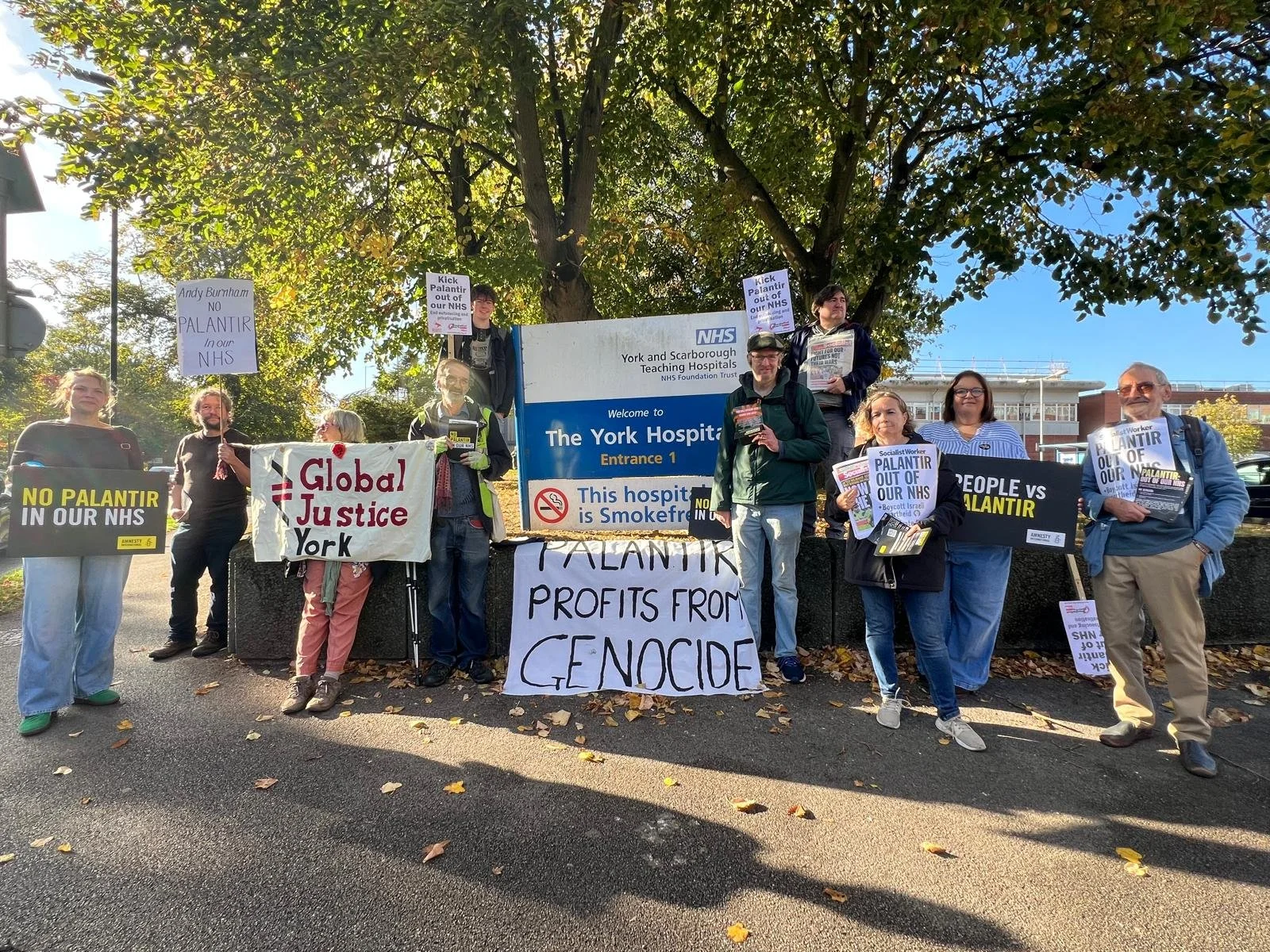
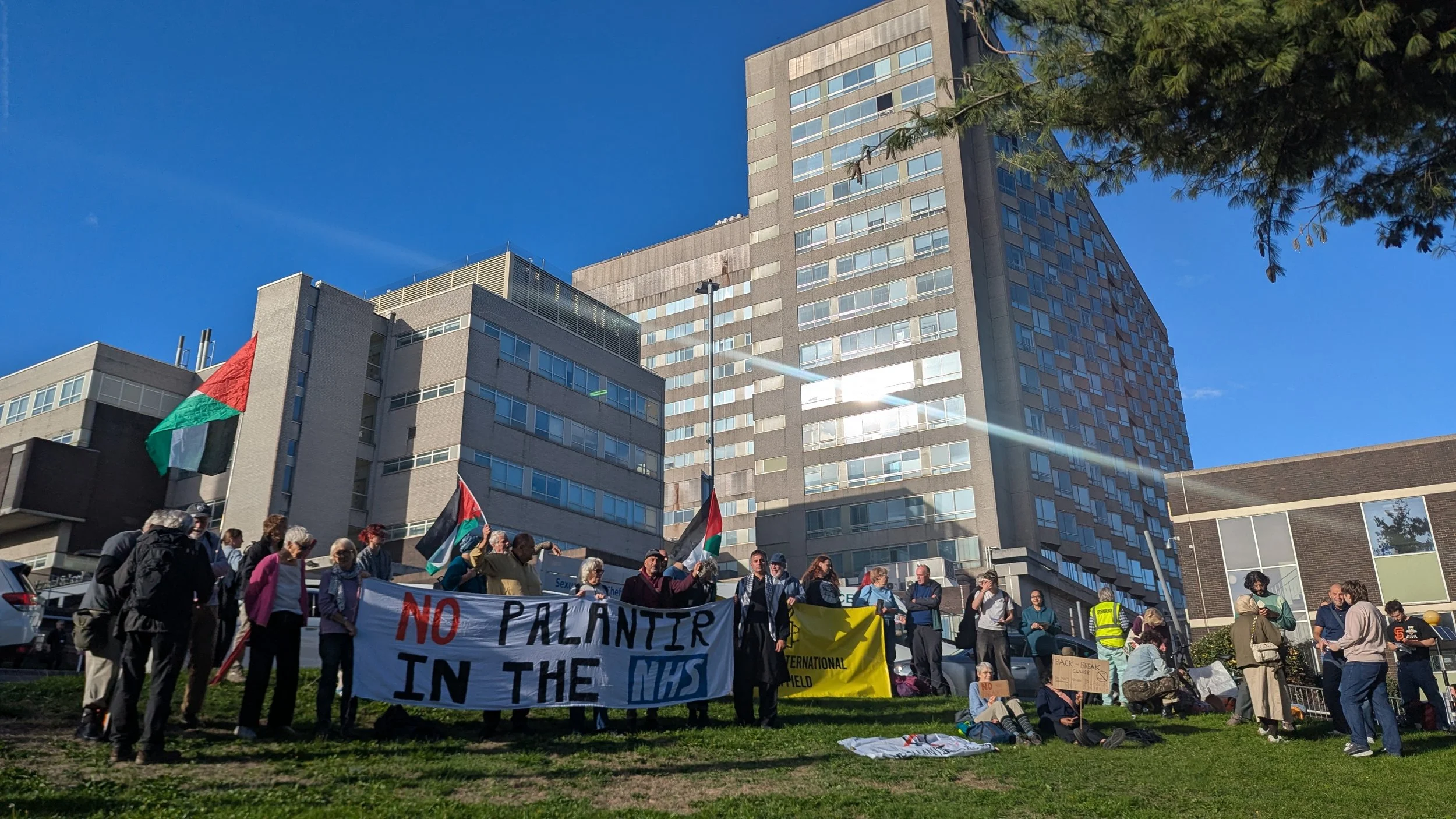
On Thursday 1st October, the ‘People vs Palantir’ national day of action saw local protests take place at over 40 locations across England, united in demanding an end to Palantir’s NHS contract. The day concluded with a rally outside Palantir's London HQ which was attended by hundreds of NHS patients and health workers. This day was part of a global week of action which saw protests happening across North America, South America, Europe and Australia.
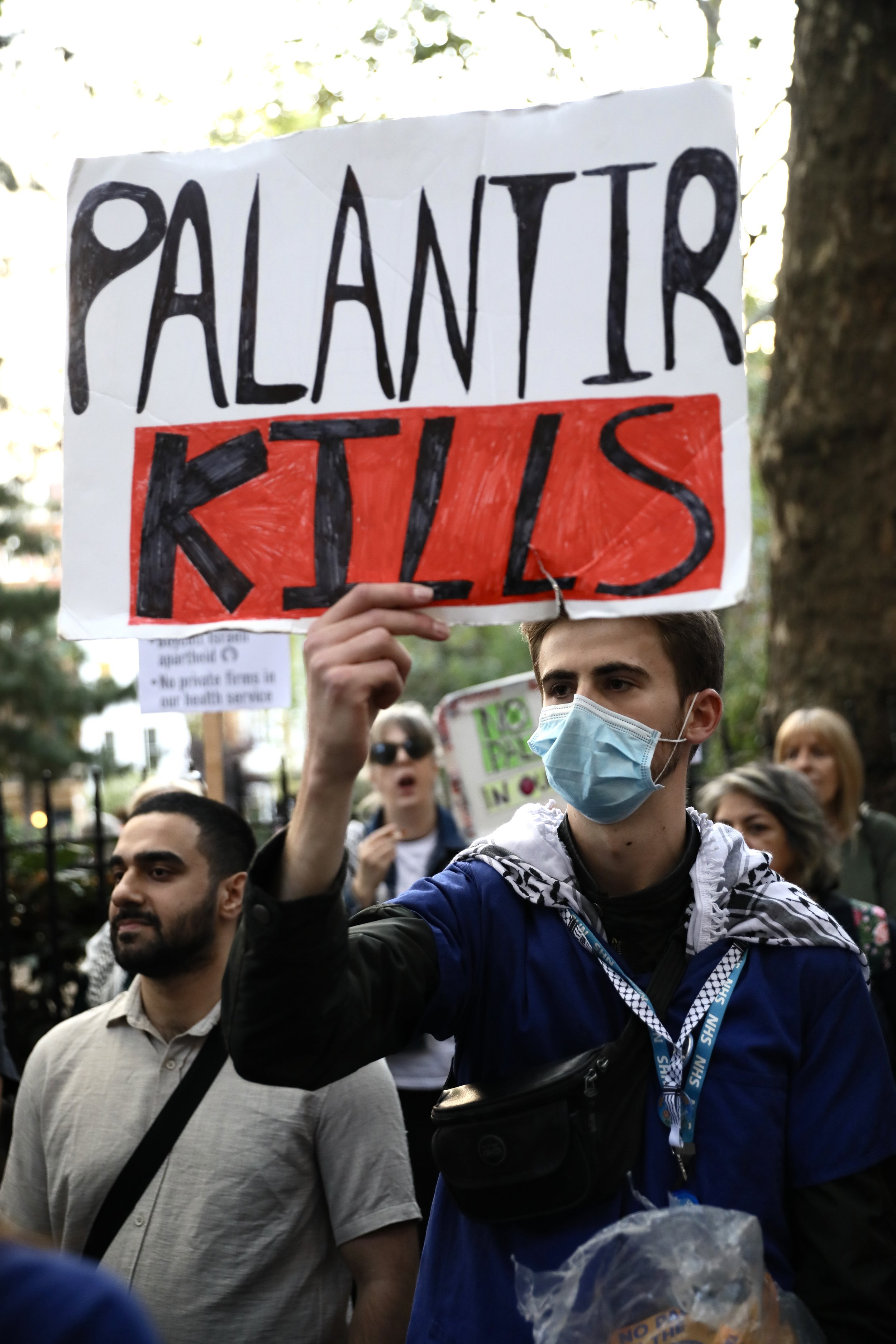
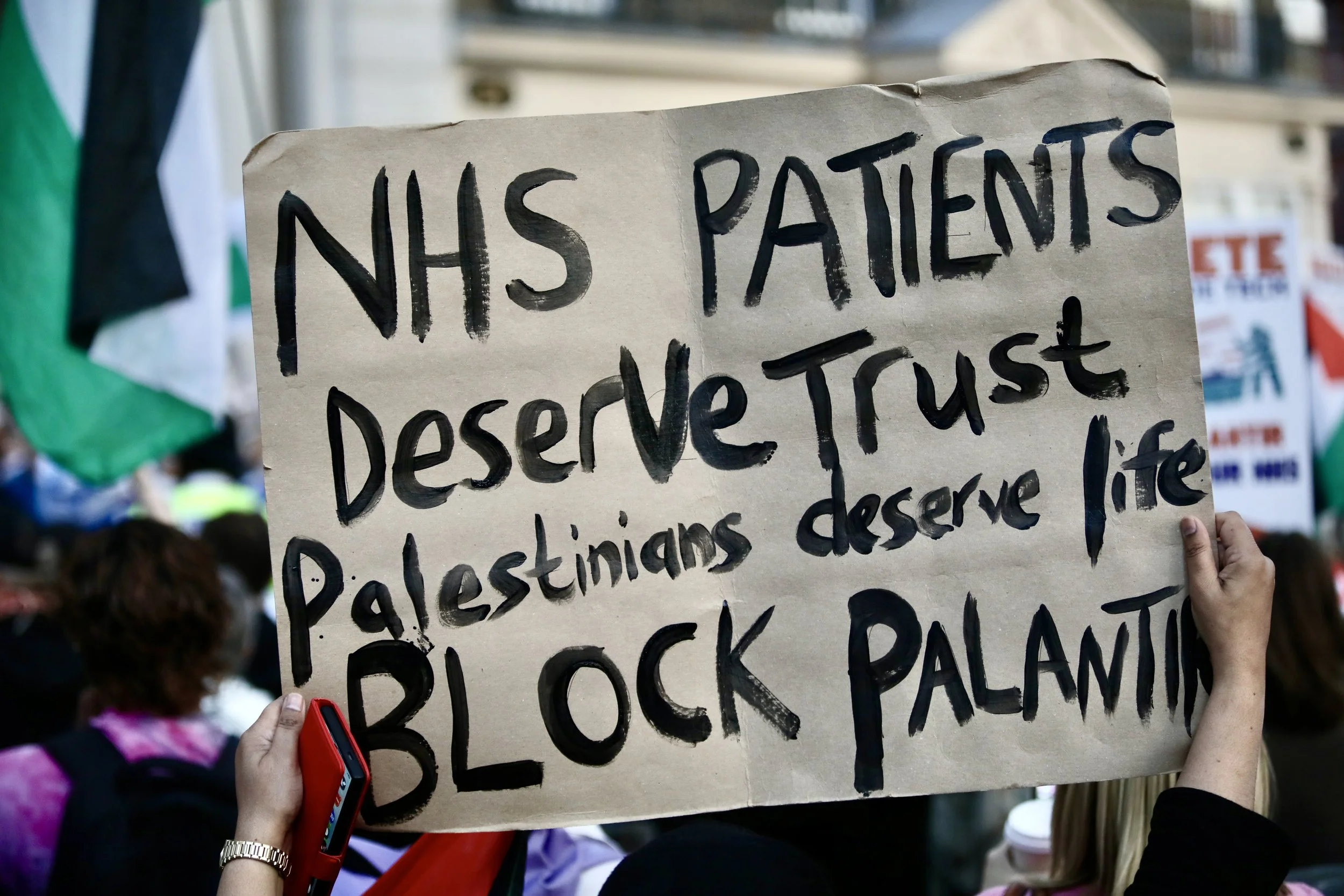
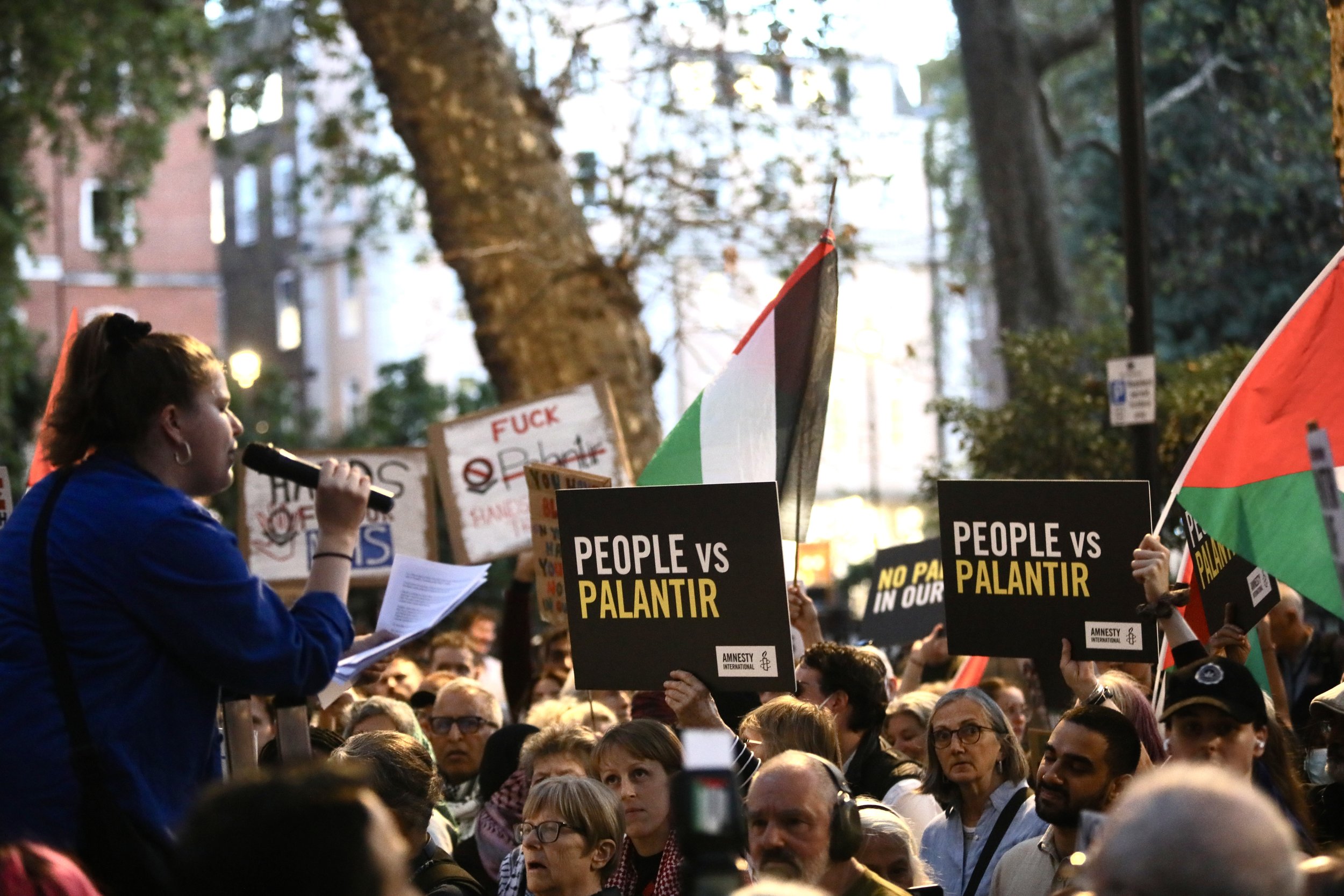
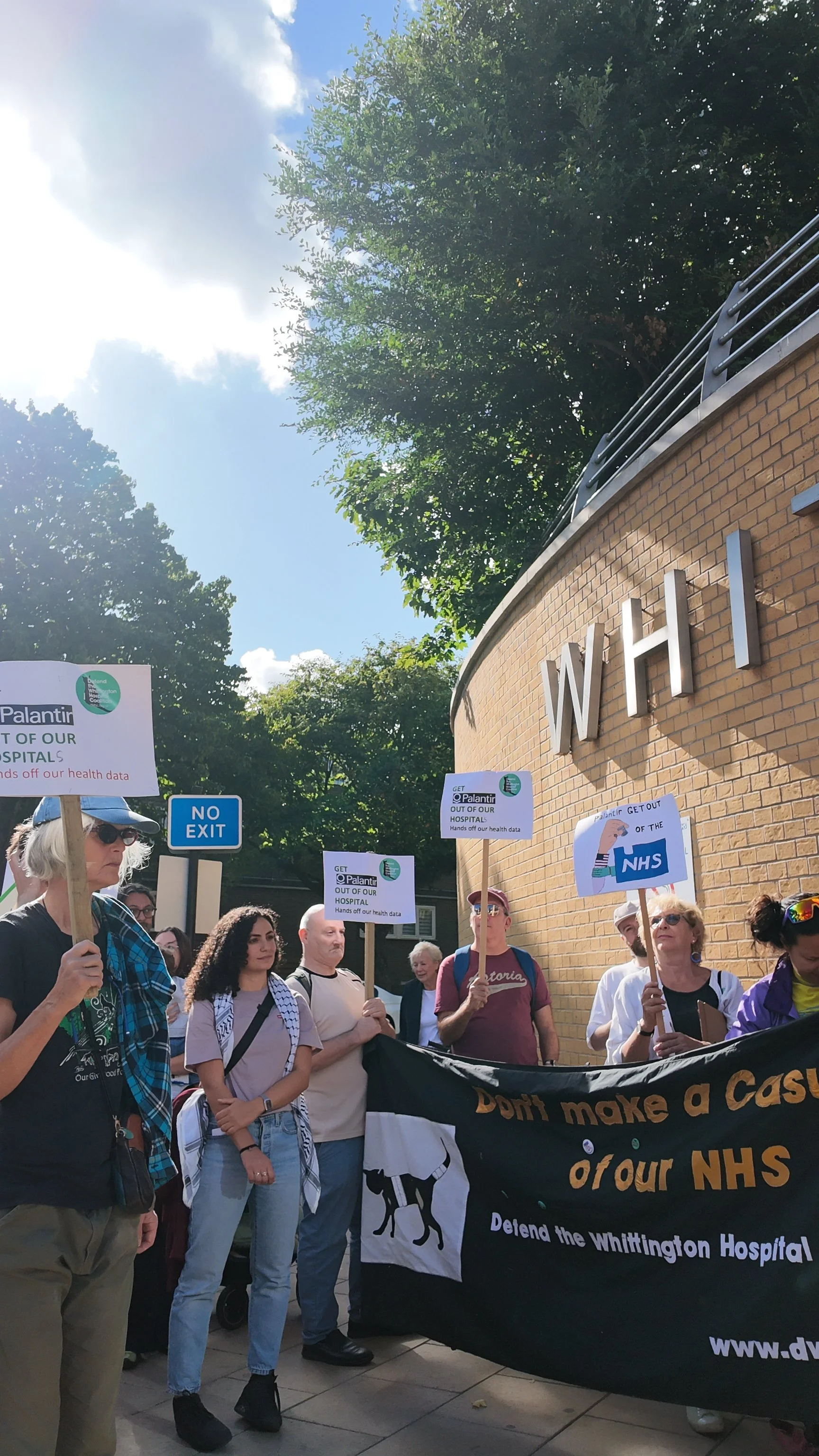
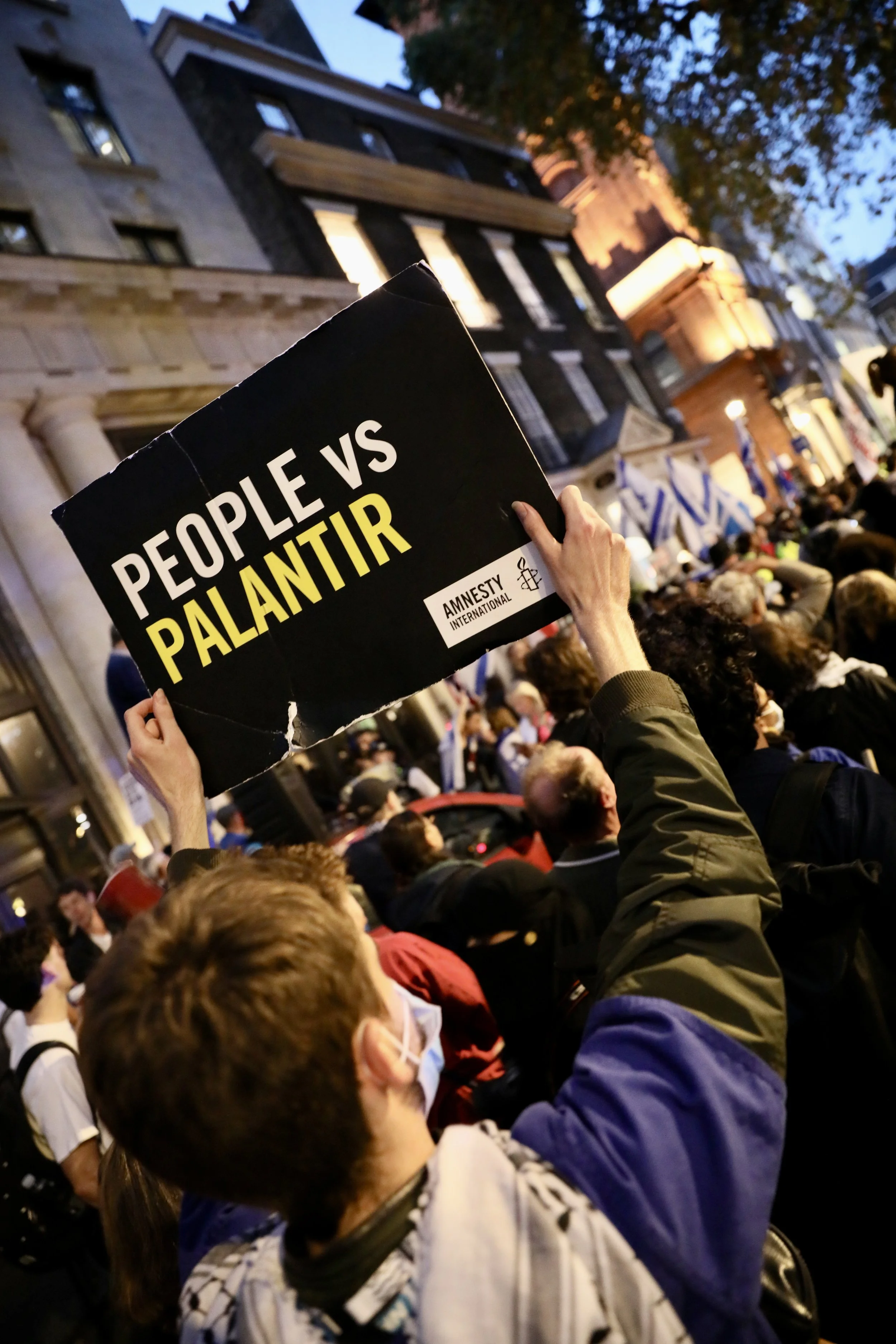
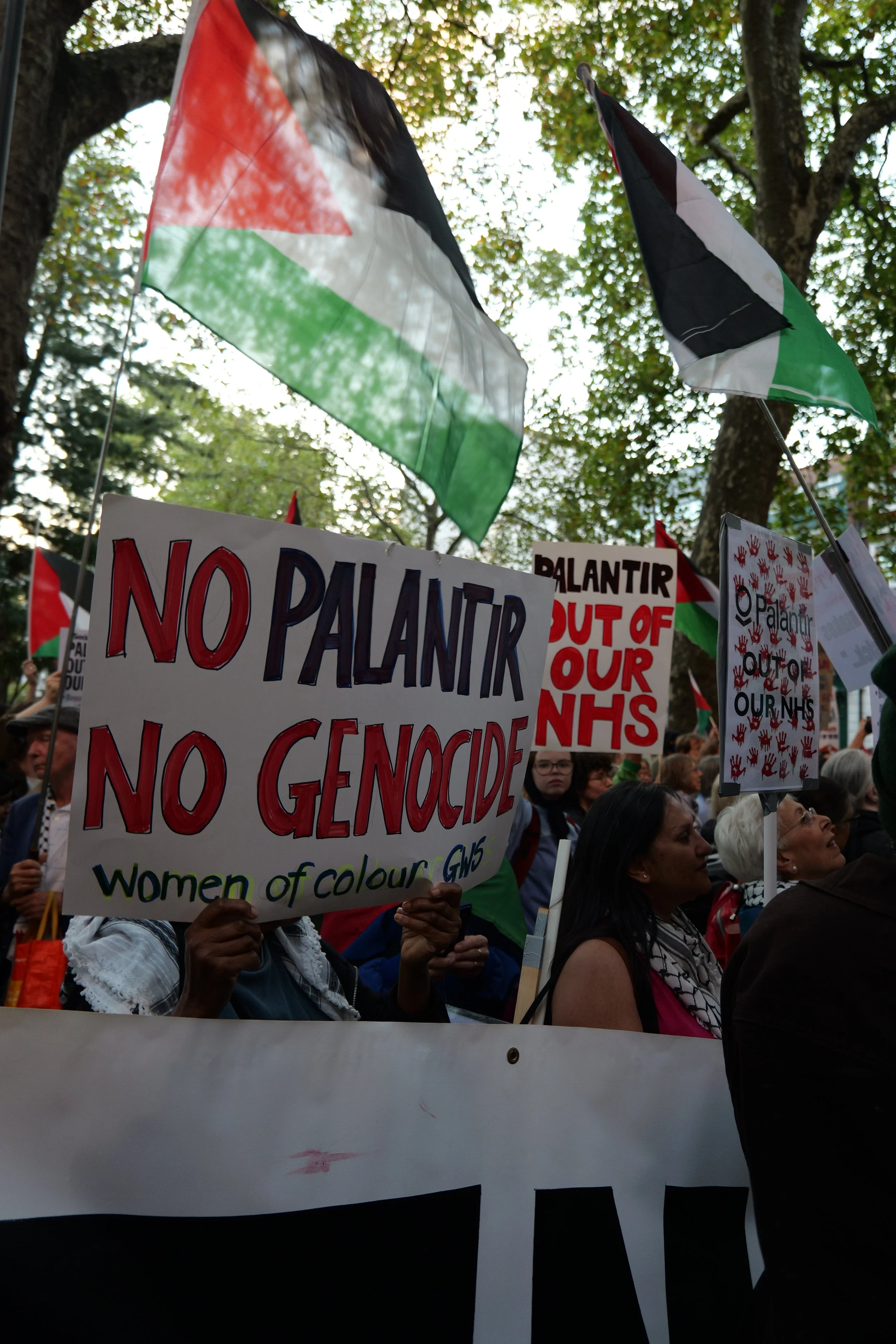
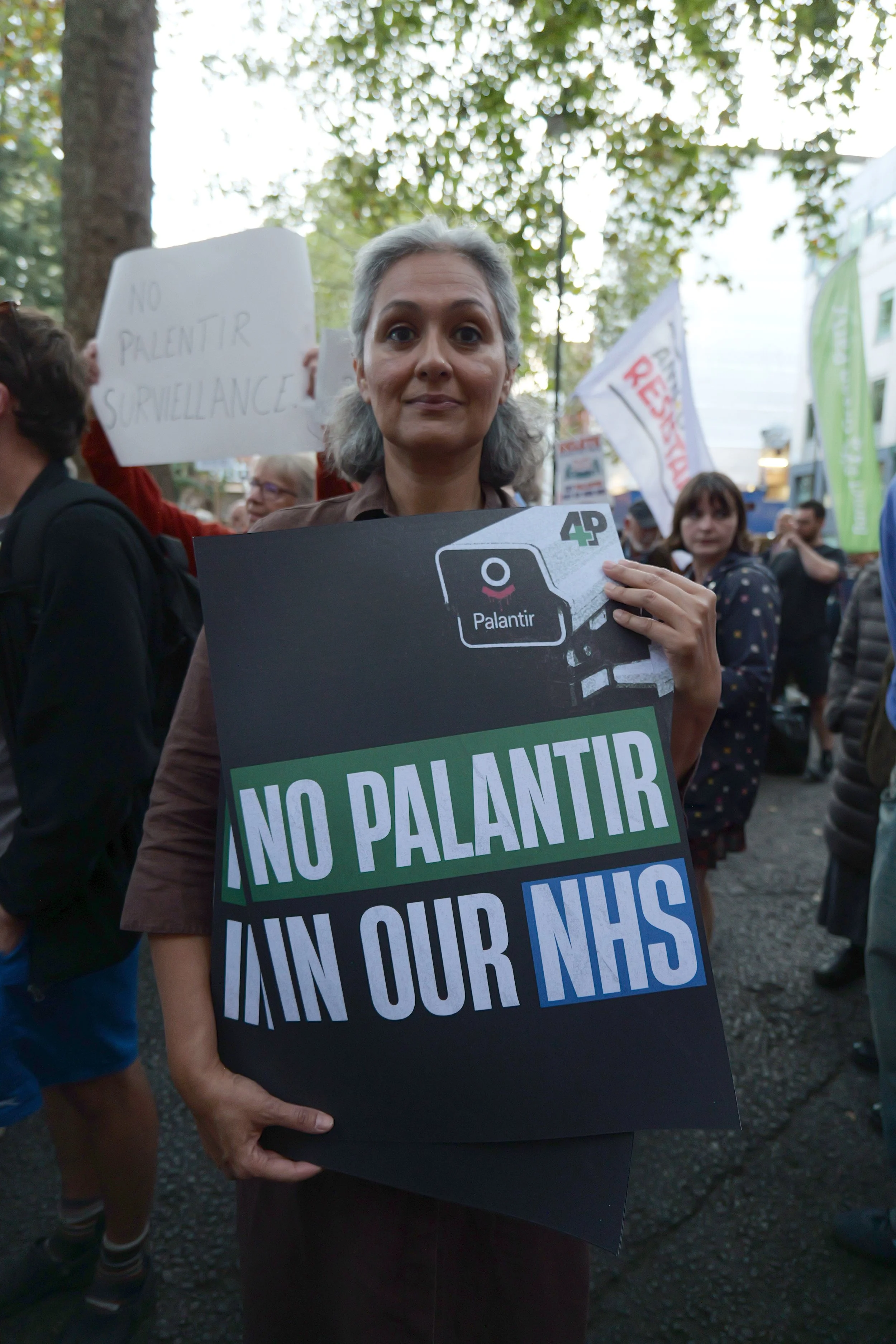
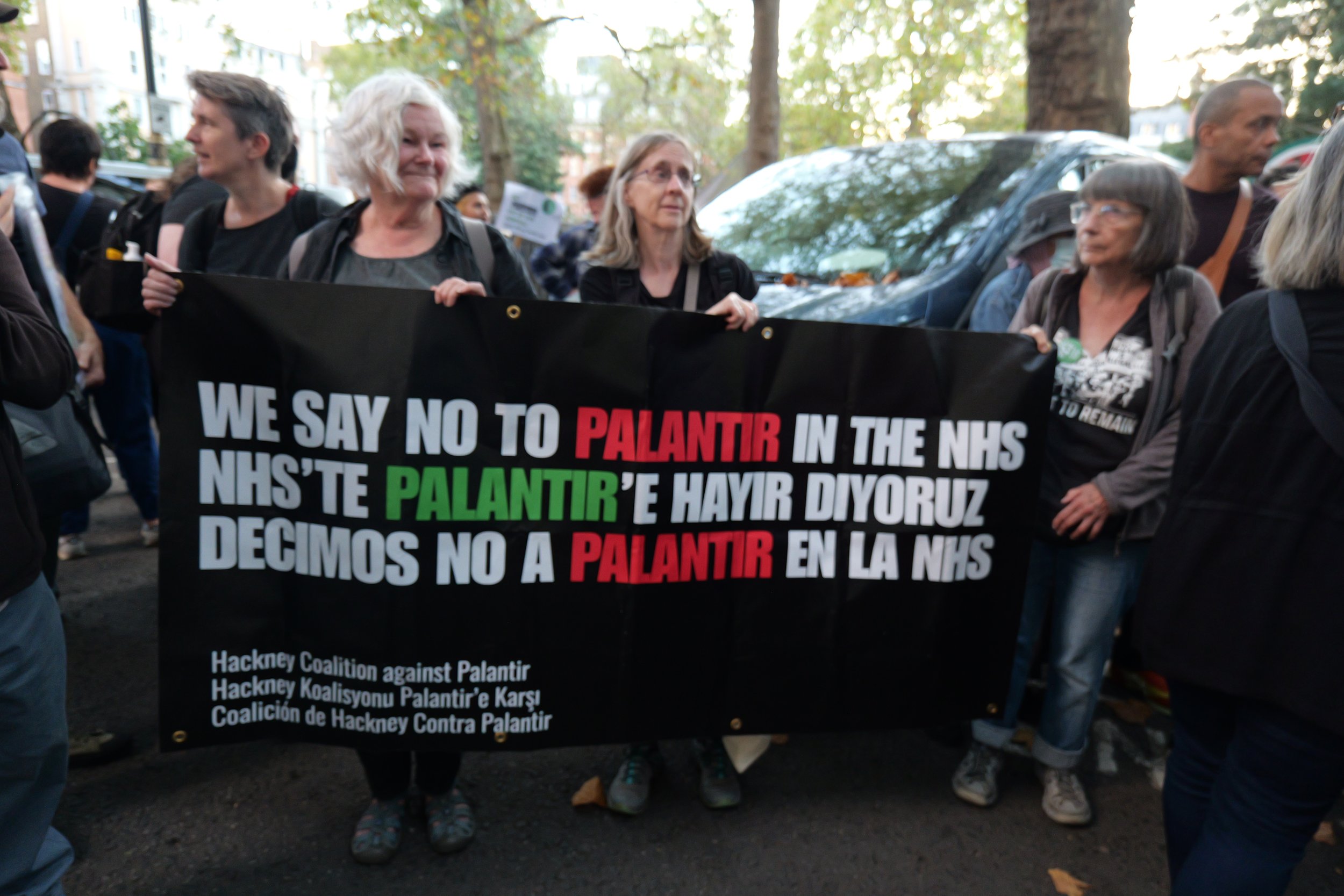
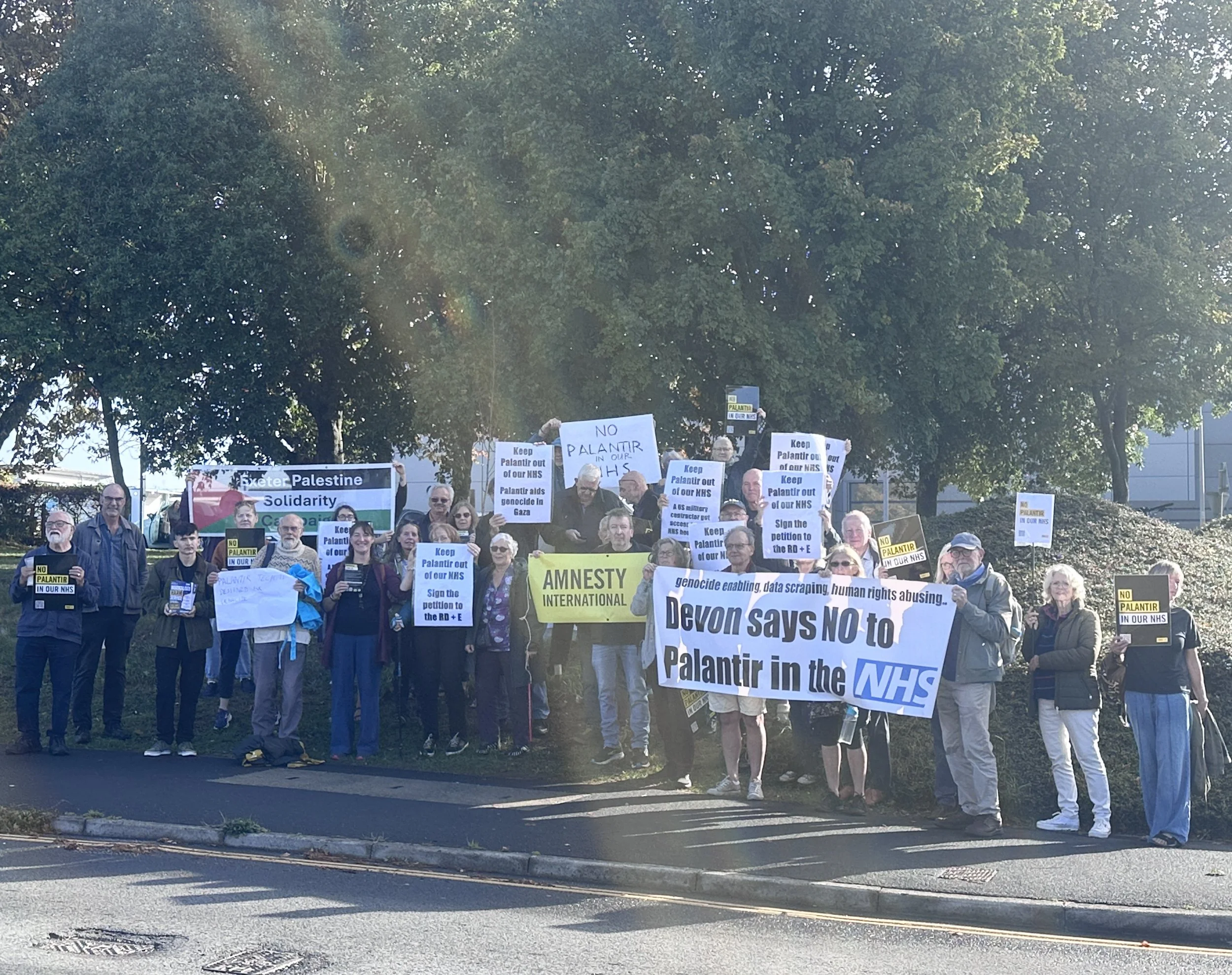

Palantir holds a £330m contract to run the NHS’s Federated Data Platform. The same company is used by the Israeli military as it commits genocide in Gaza and powers ICE deportation raids in the US. The government can choose to not extend Palantir’s contract using what’s being referred to as a “break clause”, and it’s expected to decide in the coming weeks.
The scale of last week’s protests is unprecedented, and is testament to the strength of feeling that has built up on this issue amongst the general public. This is further evidenced by the tens of thousands who have written to their NHS Trusts, the hundreds of thousands who have signed petitions, and the millions who have engaged with social media content from this campaign.
Our movement has dramatically shifted the terrain in Parliament too. A couple of years ago, there were a handful of MPs who would occasionally speak about Palantir. Now, MPs from at least seven different political parties have raised concerns about Palantir’s involvement in our NHS. Two committees of MPs have formally come out in favour of the government exercising the break clause in Palantir’s contract.
We saw this political engagement reflected in last week’s activities, when several MPs attended local demos or public meetings on Palantir - including Labour MP Rachael Maskell, Lib Dem MP Martin Wrigley, and Independent MP Jeremy Corbyn.

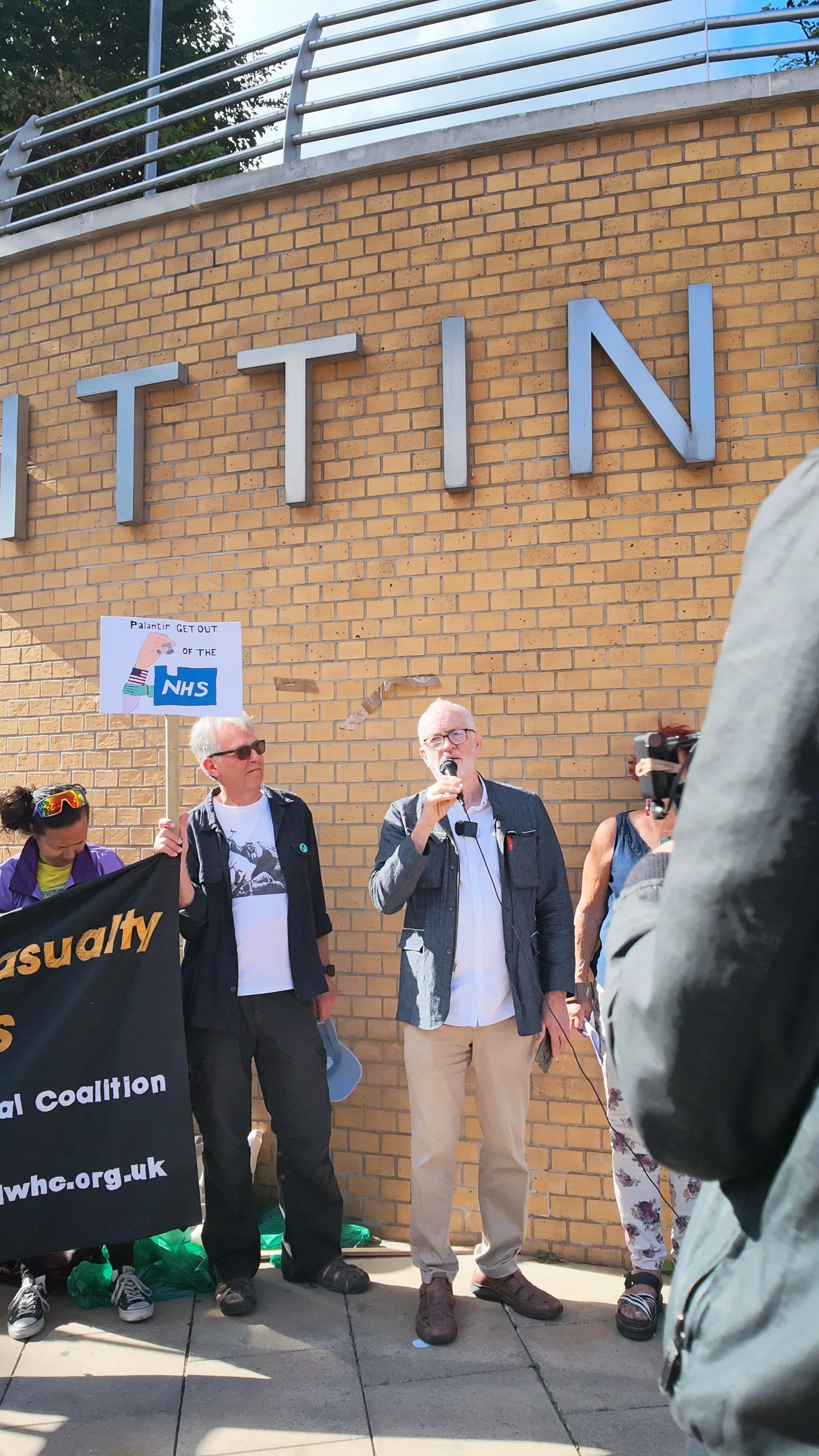
Local protests received widespread media coverage too - in Bristol, York, Hastings, Kingston, Hackney and beyond. At a national level, our movement’s arguments continue to cut through, with recent articles highlighting further doubts about the benefits of Palantir’s software and efforts within Burnham’s government to search for a UK alternative to Palantir.
The pressure is working. Our movement is successfully exposing the toxicity of Palantir as a company, and discrediting the claims that their technology is the best and only option for patients and the NHS.
But we haven’t won yet. The government will make their decision in a matter of weeks, and we must do all we can to ensure that they make the right choice. If you haven’t already, email your local NHS decision-makers and urge them to back the break clause in Palantir’s contract, and stay tuned for more campaign updates and actions!