The government has finally responded to our demands for change for the NHS
Back in April, Just Treatment Patient Leaders met with the then Health Secretary Wes Streeting and shared stories of how the ongoing NHS crisis has deeply impacted them. We delivered 10 demands for change for the NHS and secured a commitment to a written response within a month.
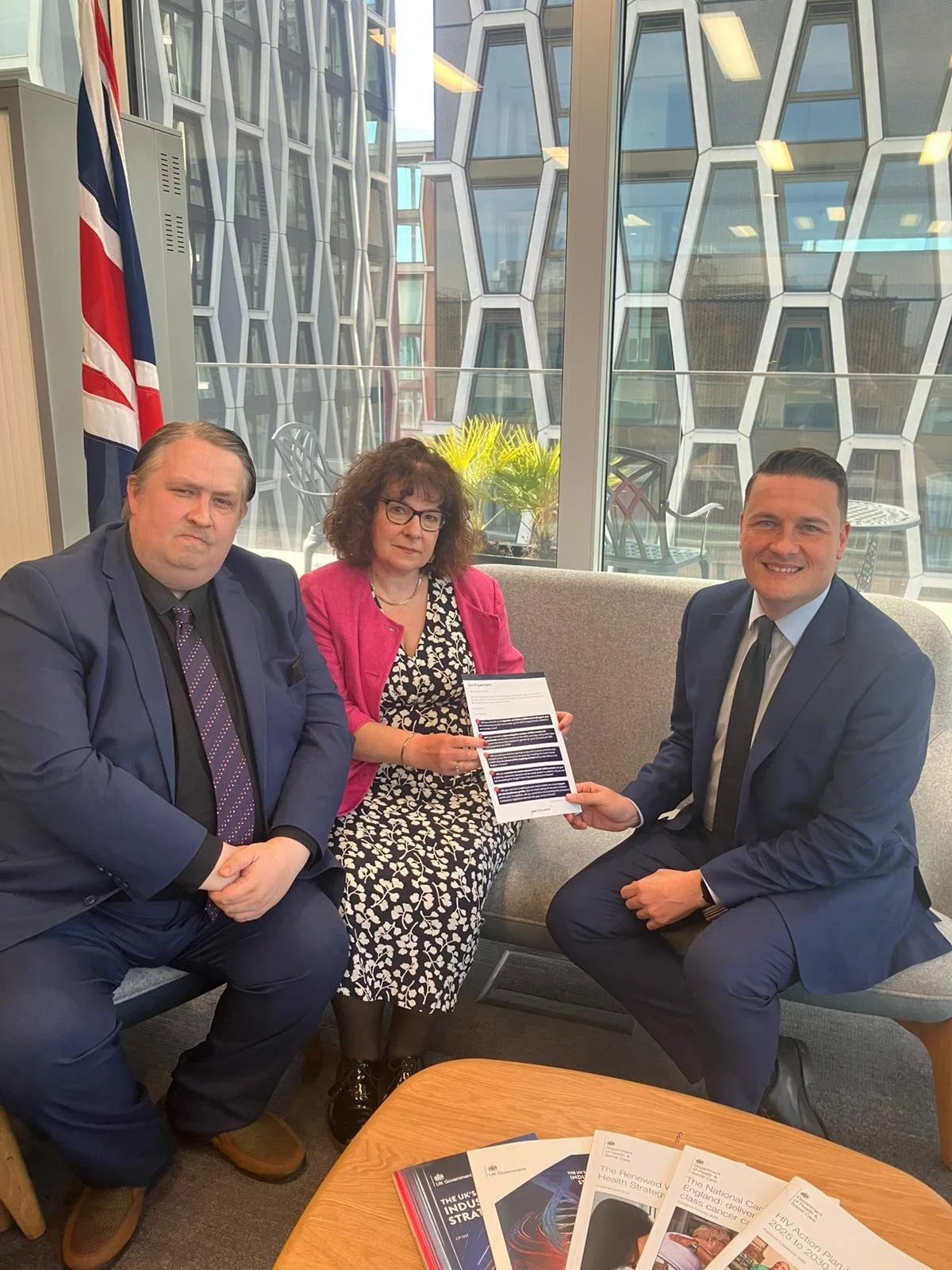
Then, everything changed. Wes Streeting resigned, and was replaced by James Murray. Soon after, Andy Burnham became Labour leader, and we had yet another new Health Secretary - Yvette Cooper. We urged her team to honour her predecessor’s commitment to address our demands for change, and we have finally received a letter from the Department of Health and Social Care (DHSC) in response. You can read the full reply here.
Put simply, it’s not good enough. Here’s why. ⬇️
On NHS funding:
The DHSC talks about delivering “record investment” into the NHS. Yet this language obscures the scale of the chronic underfunding that the NHS has faced for a decade and a half.
In truth, the last spending review equated to an annual funding increase of 2.8% - below historical averages and nowhere near the increase provided by Labour that brought about major improvements in both performance and public satisfaction when they were in power in the late 90s and early 2000s.
The government cannot keep running away from this issue: the upcoming Autumn Budget will be a vital opportunity for the new Prime Minister, Chancellor and Health Secretary to demonstrate that they are genuinely committed to saving the NHS.
On the US-UK drug deal:
The DHSC says they recognise the “strength of feeling” on this issue. Yet they are doubling down on defending this terrible deal.
The deal commits the NHS to DOUBLING spending on new drugs, and making major changes to how the UK keeps drug prices under control.
Yet STILL the government is refusing to set out how much the deal will cost - and crucially, exactly how it will be funded. They are also refusing to share insights on the potential health impacts.
While some new medicines may be approved under the deal, the benefits must be weighed against expert health economists’ calculations that show this deal is likely to cost the lives of hundreds of thousands of patients over the next decade. The government is putting those lives at risk in order to prop up the pharmaceutical industry’s unsustainable greed. Patients deserve answers, but the government is still not giving them.
On youth mental health:
The DHSC acknowledges that tackling the youth mental health crisis will “require action across multiple sectors”.
Yet they also admit that the government has no current plans to assess the role of corporations and business models in driving youth mental illness. This comes at a moment where social media giant Meta has just agreed to pay up to $18bn to settle claims that its platforms harm young people.
Instead, the UK government is focused on cutting the benefits bill, not addressing the drivers of the unprecedented crisis young people are facing in their health, education, employment, housing, and future on a climate change ravaged planet.
This is not good enough: the government must be willing to confront the corporate drivers of this crisis, or it will continue failing millions of young people.
On private providers:
The DHSC says the NHS has “always worked" with private providers. What they didn’t acknowledge is the fact that this comes at the direct expense of our public NHS. Private providers poach NHS-trained staff and they cherry pick patients; leaving an under-resourced NHS to deal with the most complicated cases.
The DHSC also said they want to ensure that taxpayers get “the best possible value for money”. Yet expanding outsourcing is doing the direct opposite of that. It is funnelling hundreds of millions of taxpayers’ money towards funding outsourced care that is far more expensive than delivering it in-house.
A recent landmark report by CHPI found that over just two years, private firms generated £1.6 billion in profit from £12 billion worth of NHS contracts. This means on average roughly 13% of contract value goes directly toward corporate profits and interest payments, rather than frontline patient care. How can this possibly be classed as good “value for money”?
On Palantir:
The government refused to even acknowledge this issue.
They know that millions of patients don’t want our patient data to be managed by this US spy tech company. Right now they have an opportunity to address this by choosing to not extend Palantir’s contract.
We urge them to listen to patients, health workers and privacy campaigners and get this toxic company out of the NHS.
On patient voice:
The DHSC says that under planned changes, ICBs and local authorities will be accountable for listening to patient feedback and responding to it.
But beyond feedback, where are the concrete avenues for patients to have a direct say over OUR health service, including at a national level?
It is also ironic that the letter references the support of “patient groups” over the US-UK pharma deal - but the truth is that so many of these groups are directly funded by pharmaceutical companies.
Finally, we are very disappointed that the new Health Secretary has refused our request to meet with patients who have had their lives and families devastated by the ongoing crisis in the NHS.
When Yvette Cooper started in post, we urged her to prioritise investing in the NHS instead of boosting corporate profits. Worryingly, this letter does not show any real signs that these warnings are being listened to.
At the upcoming Autumn Budget, we urge the government to change course, and commit to taxing corporations and wealth in order to fund our crumbling public services.