
NHS patients finally meet face-to-face with Wes Streeting
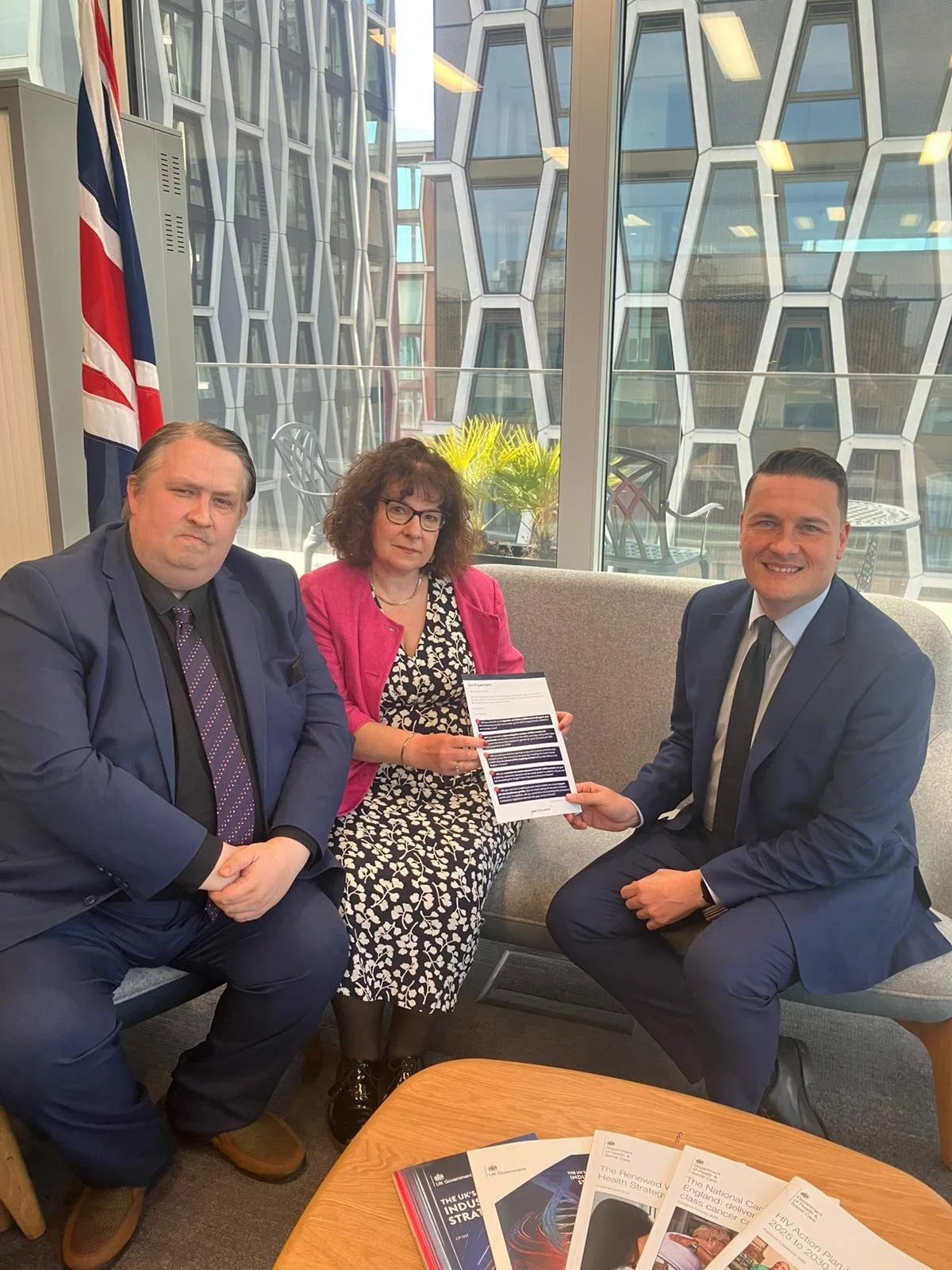
On Tuesday 28th April, patients whose lives have been severely impacted by the ongoing crisis in our NHS met with the Health Secretary Wes Streeting, to share their stories, concerns and demands for change with him directly.
This meeting was secured after over a year of tireless campaigning, which culminated in a protest outside Wes Streeting’s office in December 2025 where patients spoke with him face-to-face and got him to commit to a proper in-person meeting.
In attendance at the meeting were Just Treatment Patient Leaders Mathew and Müge. Mathew’s mum waited 11 hours for an ambulance after a fall at home, and died two days later from sepsis. Müge nearly died from sepsis herself after a 12 hour wait in A&E. She was then forced to pay £13,000 from her pension fund for reconstructive surgery the NHS waiting list couldn’t deliver in time. Mathew and Müge were joined by Just Treatment staff members Hope and Diarmaid.
We told Wes Streeting what an underfunded NHS does to the people inside it. We asked why deadly urgent care delays are still putting patients at risk and traumatising health workers. We asked why £1.6 billion in pure profit has been extracted from the NHS by private healthcare companies over the last two years, while patients die in corridors waiting for beds. We asked why big pharma companies are allowed to hold patients’ lives to ransom and squeeze tens of billions more out of the NHS at a time when it is critically under-resourced.
We also handed the Health Secretary a list of 10 concrete demands connected to our concerns, covering everything from social care funding and doctor training places, to the youth mental health crisis and political donations from private healthcare. We have asked for a written response within one month. You can read the full list of demands here.
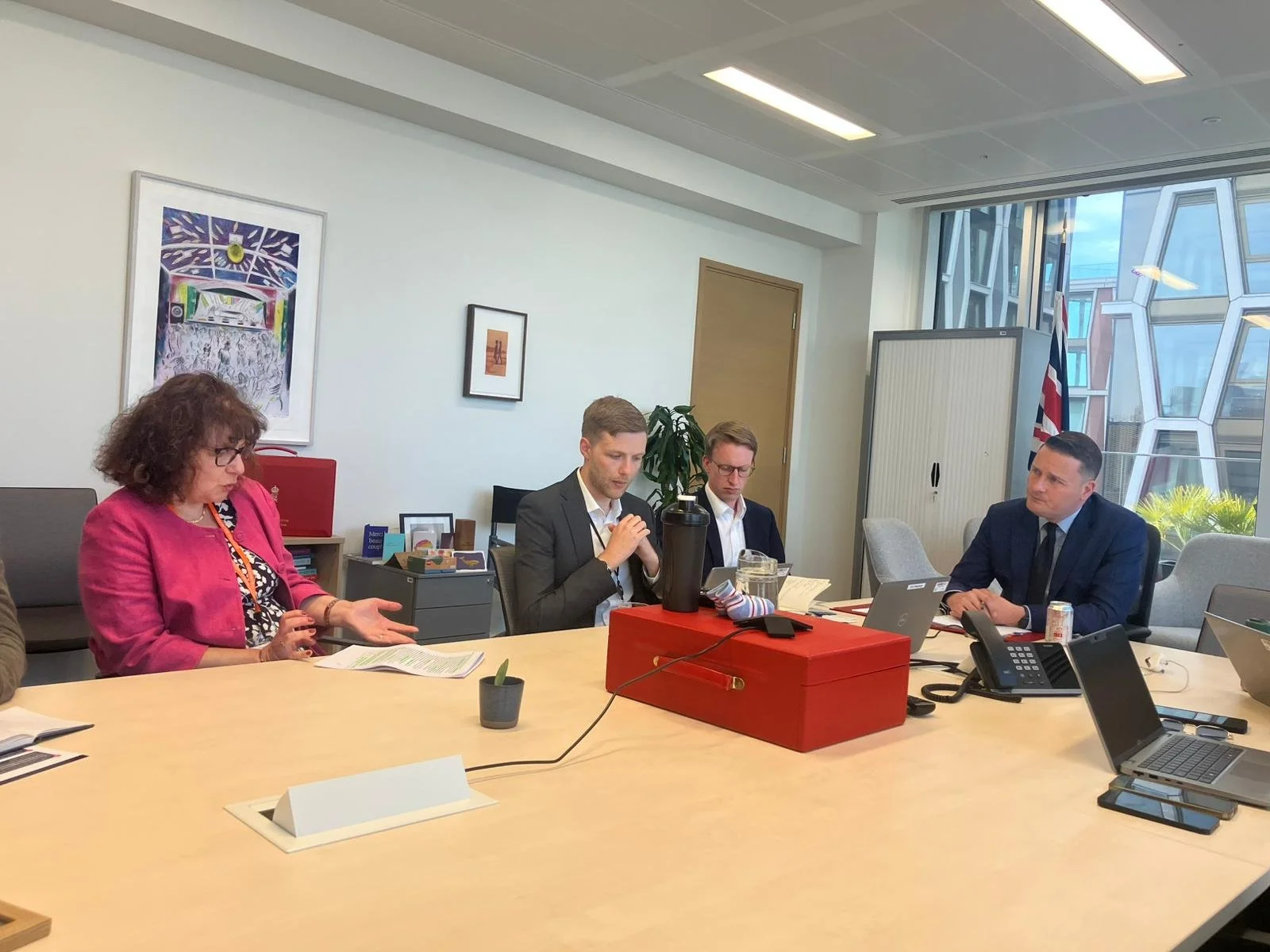
So how did the Health Secretary respond? Firstly, he acknowledged the failures that led to the hurt caused to Müge and Mathew - and the fact that this is still happening to far too many patients.
He told us he wanted more funding for the NHS and social care but that the economic situation makes it impossible. We pointed out that the last Labour government was only able to majorly improve the state of the health service by significantly increasing investment, and that this could be done by taxing corporations and the super wealthy more.
He stated his support for public services run for public interest not private profit. We spoke about the long term damage to the NHS caused by increased outsourcing, and the unjustifiable levels of profit being extracted by these private companies highlighted by recent analysis from the Centre for Health and the Public Interest. He asked for further detail on this research and said he would consider the demand of a profit cap.
He spoke about how a focus on prevention and the social determinants of ill health is a priority of the government. We pointed out that a critical element of this that often gets missed is the commercial determinants of ill health, i.e how the behaviour of giant corporations is impacting people’s health and wellbeing. He recognised that as a fair challenge and said that he would consider how to ensure this is looked at in ongoing government reviews around youth mental health.
He admitted that the pressure of Trump’s tariff threats were a key factor in the decision-making that led to the US-UK drug pricing deal. We argued that the government has not been transparent about this, and has responded to these threats in a way which puts hundreds of thousands of patients' lives at risk over the next decade according to expert analysis. He heard our concerns and asked to see the details of the research.
Finally, he committed to taking our list of 10 demands and responding to them in more detail - we’ve asked for this to be done within a month. We will of course be keeping an eye on this timescale and maintaining the pressure on the Health Secretary to engage with patients' concerns, and will evolve our campaigning strategy depending on the response that is received. We will keep Just Treatment supporters informed every step of the way.
It should never have taken over a year to secure this meeting. But the fact that it happened is a testament not just to the dedication of Just Treatment’s Patient Leaders, but to the efforts of every single supporter who took action with us - whether that was writing to Wes Streeting, sharing content on social media, or donating to make it all possible.
We will continue speaking truth to power and holding politicians to account to ensure that patients’ stories and voices are heard. We will not stop fighting for a fully funded public health service where corporate profits are never put before patients’ lives.