
Abolish Mental Health Awareness Week
This blog is written by Chloe - a Leader with our Mad Youth Organise campaign.
For anyone out there who has experienced mental illness/madness, brace yourselves.
Mental Health Awareness Week is upon us.
You know what this means - up and down the country, workplaces, schools and institutions will be brimming with mindfulness classes, arts and crafts, and cups of herbal tea. There will be talks galore about ‘Raising Awareness,’ and ‘Breaking the Stigma.’
When will we agree that awareness has, in fact, been raised? And the stigma has, in fact, been broken?
In other words, when will we actually start getting on with the real work of identifying and disrupting the systems and structures that are making us ill.
When I was at the height of my mental health crisis in 2016, mental health campaigning was almost entirely focused on awareness. Reasons to Stay Alive by Matt Haig was in the best-seller list where it had been for the last 49 weeks, and people everywhere were demanding that mental illness be talked about with the same legitimacy as physical illness. I jumped straight onboard, comparing my depression to a broken leg, or a malfunctioning liver – a medical issue that required medical treatment.
I was fired up and highly vocal about this. I organised fundraisers for organisations like Mind and The Maytree, talking openly about my experience with mental illness and encouraging others to do the same.
As the years went on, I became more and more politically active, getting involved with movements for Palestinian liberation, climate justice and renters’ rights. I started to feel that my experiences with madness/mental illness were not just some random change in brain chemistry, but rather a distress response to a world that was deeply broken.
This was when I started to realise the limit of awareness campaigns. These campaigns maintained the medical, apolitical model of mental illness – it is a change in brain chemistry that can happen to anyone, at any time, out of the blue.
The problem is, awareness campaigns never look beyond the individual experience, toward the wider systemic injustices that people face. Awareness campaigns are convenient, because they allow the systems that are causing the harm to continue.
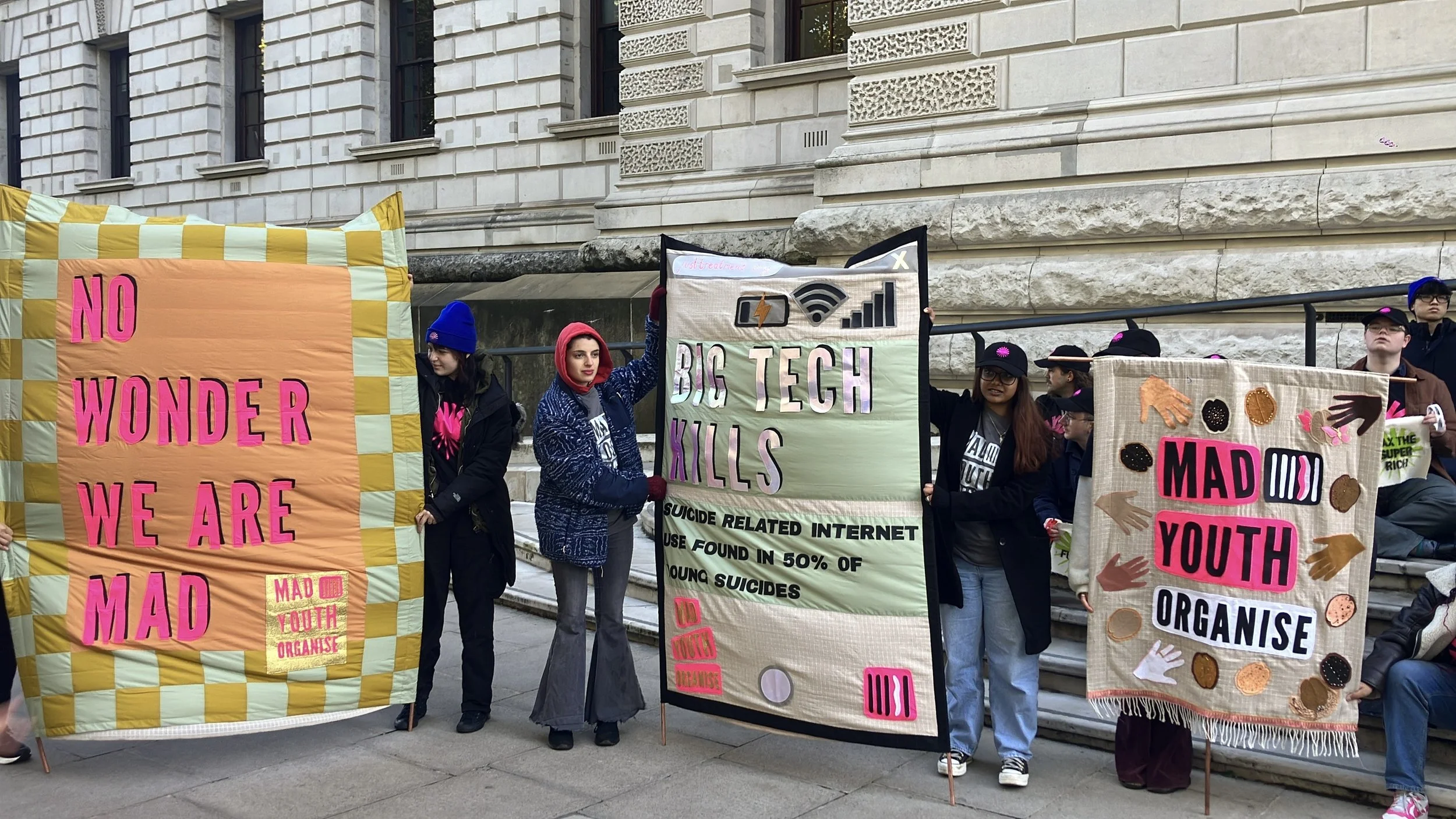
Our experiences as mad people are deeply political. From financial stress to racial profiling to unstable housing to the privatisation of care, every aspect of our experience is shaped by the socio-political landscape. And no amount of awareness raising is going to address that.
So. What lies beyond Mental Health Awareness Week?
What could this week be instead of activities intended to placate?
What if this week was full of political education, naming the enemies that are creating the difficult material conditions for us to thrive – the Big Oil companies stealing our chance of a liveable planet. The Big Tech bros amassing criminal amounts of wealth and power and shaping our global democracies. The privatised water companies pumping raw sewage into our rivers and oceans. I could go on. You get the idea. This week could be a chance to politicise our experiences, to come together to stand up and demand better.
So, instead of (or as well as) going to another mindfulness workshop this week, why don’t you sign up to Mad Youth Organise? Join our campaign to fight the systems and structures who are making us unwell.